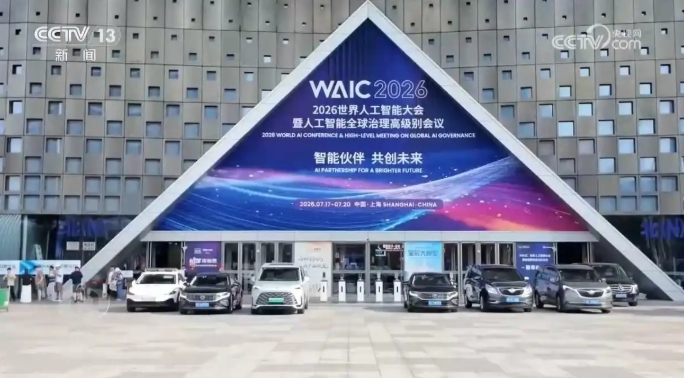
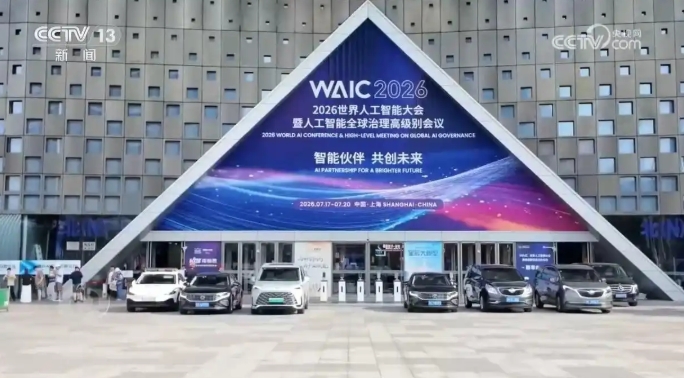
Global Intelligence, Co-creating the Future — A Full Review of the 2026 World AI Conference
On July 20, 2026, the 4-day World AI Conference and High-level Meeting on Global AI Governance concluded successfully in Shanghai. With the theme "Intelligent Partner, Co-creating the Future", the conference was not only one of the largest and most influential international events in the global AI field, but also China's first high-profile home diplomacy event in AI. In this top gathering of global wisdom and attention, China showcased the vibrant vitality of its AI industry and conveyed its firm determination to drive reform in the global governance system. Today, let us review this extraordinary event together.
Scale and Popularity: A New Record High
This conference mobilized the entire city of Shanghai. The exhibition area of the four major halls exceeded 100,000 square meters for the first time, with over 1,100 enterprises bringing more than 4,000 exhibits. The conference comprised six major sections: forum meetings, exhibitions, award competitions, application experiences, innovation incubation, and talent recruitment, attracting over 400,000 on-site visitors. Not only did the exhibition scale and number of exhibitors hit new highs, but this year's visitor numbers and media registrations also broke records — media registrations exceeded 3,700, more than double the previous year's figure.
The enthusiasm was not limited to domestic audiences. The conference's internationalization also reached a new high, with practitioners from around the world traveling to Shanghai to experience firsthand the upward momentum of China's AI industry. At the exhibition area, the reporter's most direct impression was "extremely high heat and booming popularity" — the exhibits were a feast for the eyes, and the sparks of exchange illuminated the direction of future development.
Global Participation: China's Approach to AI Governance
During the conference, official representatives from 102 countries and international organizations, along with guests from industry, academia, and research, attended. Ten bilateral diplomatic events were held. On July 16, the signing ceremony of the World AI Cooperation Organization Agreement took place in Shanghai, giving birth to the organization. This was a major move by China to respond to the calls of the Global South and unite the international community to actively promote AI development and governance, marking a significant milestone in the history of AI.
Su Xiaohui, Director of the Institute of Developing Countries at the China Institute of International Studies, noted: "Let the international community pay more attention to this field so that AI truly benefits human development. Many developing countries have seen China's achievements in AI and hope to learn from China's experience while finding their own development path. For many developing countries, this is undoubtedly an important opportunity to open up development possibilities."
During the conference, China released the new "AI Cooperation and Development Action Plan" and the "International AI Ethics Governance Action Plan." In the next five years, China will provide 5,000 AI-themed training opportunities for developing countries; establish international AI application cooperation centers targeting ASEAN, the Arab League, the African Union, CELAC, the SCO, and BRICS; and promote the meteorological intelligent early warning system "Mazu" for deployment in 30 countries. These practical measures fully demonstrate China's responsibility as a major country.
Hardcore Leap: Dual Engines of Intelligent Computing and Embodied AI
At this highly anticipated international exhibition, intelligent computing and embodied AI, respectively serving as the computing foundation and physical terminal carriers of AI development, firmly occupied two core tracks. Each gathered over 200 upstream and downstream enterprises, forming a two-way synergistic industrial display pattern.
Tang Wenkan, Director of the Shanghai Municipal Economic and Information Technology Commission, stated: "Especially in intelligent computing, we showcased 108 chips and over 200 intelligent computing products this year, doubling from last year. A significant change is that enterprises have shifted from competing on 'single-card parameters' to 'system innovation.'" The exhibition featured a series of world-leading computing achievements — including the industry's largest super-node real machine and the world's first software-defined near-memory 3D computing chip — fully reflecting China's breakthroughs in high-speed interconnection, memory-computing integration, and dynamic optimization in the computing field.
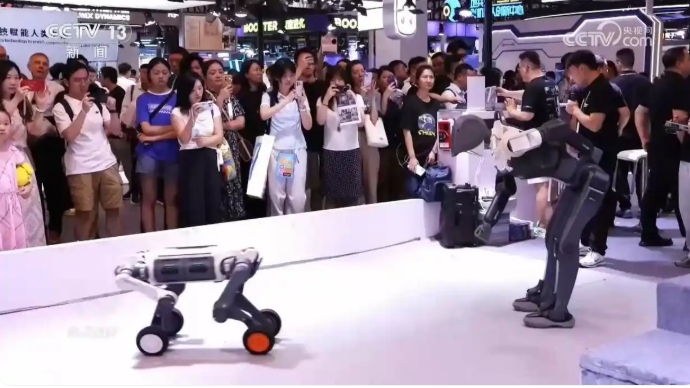
In embodied AI, 208 products were presented this year, over three times last year's number. The most notable characteristic: the industry is increasingly focused on building world models, coordinating the body and components, and real-world application. Wei Liang, Vice President of the China Academy of Information and Communications Technology, pointed out: "Current AI competition is not just about model capability but also about solving practical problems. Only by entering real business processes and scenarios, undergoing application verification and continuous optimization, can AI truly generate industrial value." The conference promoted the implementation of 57 core application scenarios in advance, covering manufacturing, healthcare, transportation, government services, and more, bringing real industry demands to the forefront of technological innovation.
Innovation Ecosystem: From One-Person Companies to Industry-Academia Collaboration
To adapt to the new entrepreneurial model of the AI era, this year's conference set up for the first time a dedicated exhibition zone for OPC (One-Person Company). Over 70% of the teams in the zone were founded less than three years ago, with founders born in the 1990s accounting for more than 50%. This "small but beautiful" entrepreneurial model complemented the deep innovation of large enterprises, together forming a vibrant industrial ecosystem.
The conference simultaneously connected global industry supply and demand, organizing 177 major international purchasing groups, issuing 212 procurement requests on-site, and achieving an expected intention procurement amount of approximately 20.36 billion yuan. Whether exhibitors, investment institutions, or individual creators, everyone was busy reaping their own fulfillment and joy.
Academic construction was a highlight of this year's conference. During the event, nearly 160 high-level forums on various topics were held. Xue Lan, Dean of the Institute for AI International Governance at Tsinghua University, commented: "We have a large number of high-level enterprises participating, showcasing the most cutting-edge products, along with high-level experts exchanging ideas. There were also dedicated academic seminars this year, which is a very important new addition. All this makes the conference high-level." Interestingly, the reporter fed the list and related information of the 160 forums to the intelligent agent WorkBuddy, also an exhibit, which generated a precise forum portrait, demonstrating the breadth and depth of the conference's academic content.
Conclusion: Embracing an Intelligent Future with Open Cooperation
The 2026 World AI Conference was not only a technological feast but also a historic dialogue on restructuring the global AI governance system. From record-breaking exhibitions to the establishment of the World AI Cooperation Organization that built consensus; from hardcore breakthroughs in intelligent computing and embodied AI to the emergence of innovation ecosystems like one-person companies — China is leading the AI industry toward a universal, safe, and sustainable development path with greater confidence and openness.
As the conference theme "Intelligent Partner, Co-creating the Future" suggests, AI should not be a patent of a few countries but a common partner for all humanity. In the future, China will continue to work with countries around the world to promote AI for the betterment of humanity and build a community with a shared future in the intelligent era.