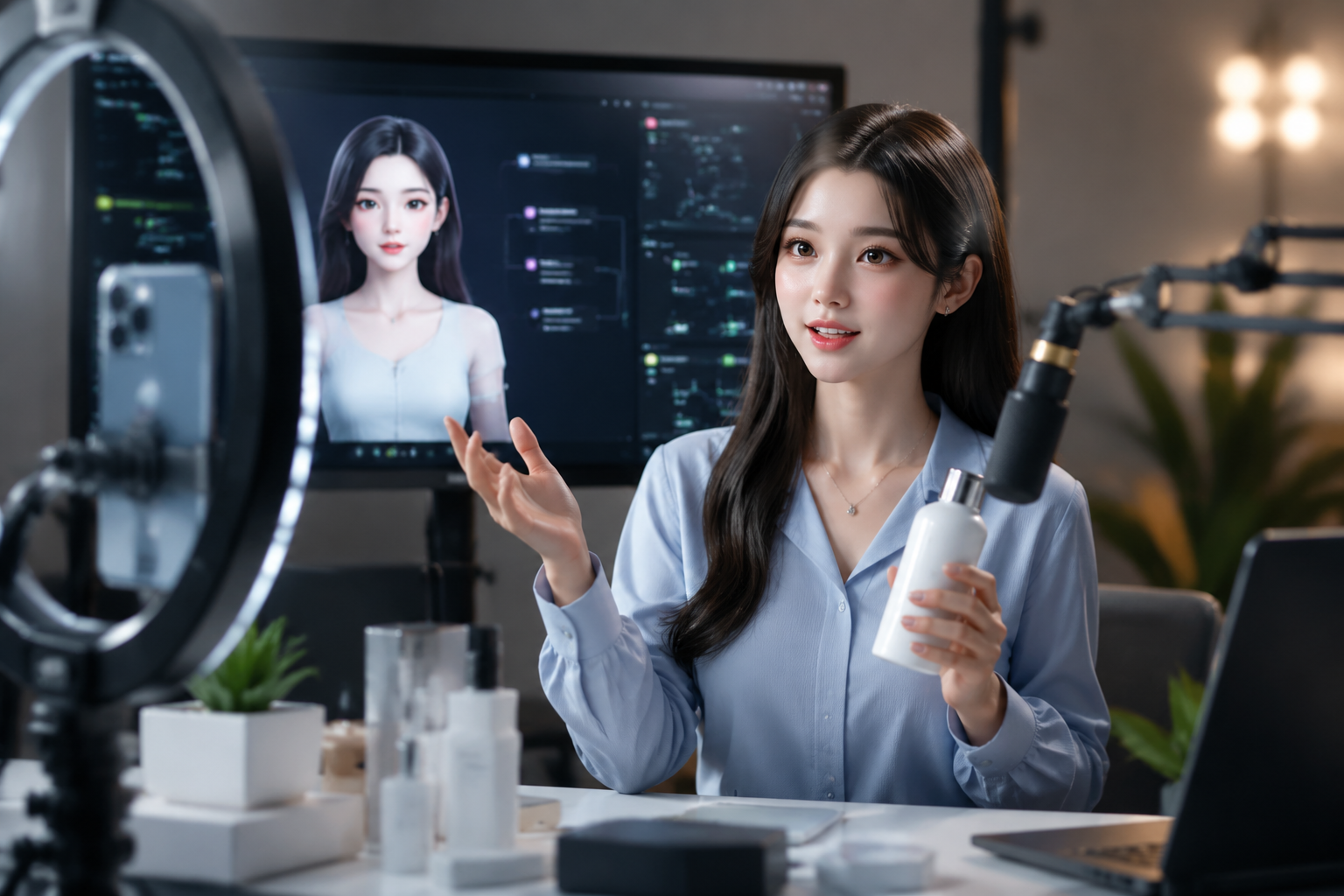
In July 2026, AI digital human live selling experienced explosive growth. According to industry data, in the first three weeks of July alone, the number of merchants using digital humans for live streaming in China surged by 320%, with daily average sales exceeding 200 million yuan. Behind this phenomenon lies the deep restructuring of traditional live e-commerce by AI technology—no need for real people to appear, no high costs for venues and teams. Ordinary people only need a smartphone and a set of AI tools to set up a 24/7 live selling studio.
Digital Human Live Streaming: From Concept to Money Machine
Three years ago, digital human live streaming was still limited to expensive enterprise applications, with a single system costing hundreds of thousands of yuan. Now, with the popularity of open-source models and cloud services, the cost of creating a digital human has dropped to the thousand-yuan level. Taking the mainstream "Virtual Streamer" tool as an example, users only need to upload a photo or a video, and AI can generate a highly realistic digital human image that can respond to live comments in real time, introduce products, and guide orders.
"I spent less than 3,000 yuan to set up a digital human live studio, and now I have over 200 orders per day," said Chen Ming, an entrepreneur from Hangzhou, in an interview. He was originally an e-commerce operator. Last year, he started trying AI digital human live streaming, choosing the clothing clearance track. By leveraging a 24-hour digital human stream paired with low pricing strategies, his monthly profit has exceeded 50,000 yuan.
Monetization Models: Three Main Paths
Currently, the monetization of digital human live streaming is mainly divided into three categories:
- Self-operated Sales: Entrepreneurs with product sources or supply chain advantages directly sell products using digital humans, earning profit margins. Suitable for standardized categories such as clothing, daily necessities, and food.
- Streaming Agency Services: Provide digital human streaming services to traditional merchants, charging by the hour or via revenue sharing. Media blogger "AI Pro" revealed that the team has signed contracts with over 30 small and medium merchants, with monthly agency revenue exceeding 150,000 yuan.
- Tool Distribution: Distribute digital human live streaming software, earning commissions or margins. For example, the agency system of a well-known platform shows that each system sold yields a 30%–50% commission, and selling 100 sets per month can generate a profit of over 100,000 yuan.
Practical Guide: Three Steps to Start Digital Human Live Streaming
For individuals with zero experience, entering digital human live streaming is not complicated. Follow these steps:
Step 1: Product Selection and Positioning
Choose high-margin, low-return products such as accessories, small home items, and course materials. Avoid perishables and electronic devices that require complex demonstrations. At the same time, position the live room into a niche, for example, "Late Night Stress-Relief Stationery Store" or "Mom's Favorite Kids' Wear Flash Sale."
Step 2: Build the Digital Human
Use tools like "HeyAI" or "Virtual Streamer Pro" to create a digital human avatar in 1-2 hours. Ensure the avatar style matches the product: for cosmetics, use a trendy female image; for outdoor gear, use a sporty male image. Set the live script; AI tools can automatically learn product selling points and generate presentation scripts.
Step 3: Operation and Optimization
Initially, run 6-8 hours of live testing daily, observing engagement and conversion rates. Use AI analytics tools to adjust scripts and product placement. It is recommended to have a real person stream as a supplement, stepping in when the digital human cannot handle complex issues. At the same time, distribute across multiple platforms (Douyin, Kuaishou, Video Account) to expand your traffic pool.
Risk Warnings and Industry Outlook
Although the barrier to entry for digital human live streaming is low, it is not "effortless money." Platforms have strict regulations on digital human live streaming. For example, Douyin requires that digital human streams be labeled as "Virtual Streamer" and that content compliance be monitored in real time. Additionally, digital humans lack emotional interaction, making it difficult to build user loyalty; they are suitable for quick, impulse-buy scenarios.
Industry experts point out that the future of AI digital human live streaming lies in collaboration with real streamers—digital humans handle "quantity" (long coverage hours), while real humans handle "quality" (high-conversion interaction). With the development of multimodal AI, digital humans will gain stronger emotional understanding and adaptability, potentially completely reshaping the landscape of live e-commerce.
Asia Finance believes that for ordinary entrepreneurs, the second half of 2026 is still a window to enter digital human live streaming. However, blind following of trends should be avoided. It is recommended to start with a small-cost test, prove the profit model, and then scale up. Follow AI Wealth Bootcamp for more practical AI money-making methods.